What Porn Actually Does to Your Brain
- Dopamine drives wanting, not pleasure — porn hijacks that wanting system relentlessly
- Chronic overstimulation causes the brain to reduce dopamine receptors, building real tolerance
- Structural brain changes are measurable: less gray matter, weaker prefrontal connectivity
- DeltaFosB accumulates with repeated use and persists weeks after stopping, sustaining cravings
- The brain can heal — but recovery takes months, not days
In 2014, researchers at the Max Planck Institute for Human Development in Berlin published a study that should have been bigger news than it was. They scanned the brains of 64 healthy adult men, measured their pornography consumption habits, and found a direct correlation: the more pornography a man watched, the less gray matter he had in the right caudate nucleus — a structure in the striatum that sits at the center of the brain's motivation and reward circuitry. The men who watched the most pornography also showed weaker functional connectivity between that region and the prefrontal cortex, the part of the brain responsible for impulse control and decision-making. The researchers (Kühn & Gallinat, JAMA Psychiatry) described the findings as significant. The implication — that pornography use was producing measurable structural changes in the brain — was hard to dismiss.
That study didn't prove pornography causes addiction. One study rarely proves anything on its own. But it was consistent with a decade of converging evidence from addiction neuroscience, and it put a concrete image on something that a lot of people had been experiencing without having any framework to understand it.
The reward circuit and why it breaks
To understand what pornography does to the brain, you need a basic picture of how the brain's reward system works — not because the science is complicated, but because most people are working with a fundamentally wrong model of it.
The reward system is not primarily about pleasure. That's the misconception. Kent Berridge, a neuroscientist at the University of Michigan who has studied the reward system extensively, showed through careful experiments that dopamine governs wanting, not liking. These are neurologically separate systems. You can want something desperately and get almost no satisfaction from it once you have it — anyone who's spent three hours scrolling through content they don't even enjoy can recognise that experience.
Dopamine is the brain's "pursue this" signal. It evolved to drive behaviour toward things that took real effort: food you had to hunt or forage, relationships you had to build over time, status you had to earn. The effort involved acted as a natural limiter. You couldn't flood your reward system indefinitely because the real world imposed constraints on how much of any reward was available.
Internet pornography removed those constraints. New, novel content is available instantly and without limit. And novelty is one of the most powerful dopamine triggers the brain has — stronger, in many contexts, than the reward itself. Each new image or clip triggers a fresh anticipatory dopamine release. There's no natural stopping point because the signal that would normally indicate "enough" never arrives. The brain is being handed an unlimited supply of the very thing its wanting system was designed to chase.
What chronic overstimulation does
The brain is adaptive. When any system receives consistently higher-than-normal input, it compensates by turning down its own sensitivity. With the dopamine system, this happens through a process called receptor downregulation: the brain physically reduces the number of D2 dopamine receptors in the reward pathway. Fewer receptors mean a weaker response to the same amount of dopamine. The same content that once produced a strong reaction now produces less. More stimulation is needed to feel anything.
This is the definition of tolerance, and it's the same process that occurs with alcohol, cocaine, opioids, and gambling. The Max Planck study was measuring the structural evidence of exactly this — the grey matter reduction in the caudate nucleus reflects the neurological cost of sustained overstimulation.
The downstream effect is what most people actually notice and can't explain. When your dopamine system is desensitised to high-intensity input, ordinary life goes flat. Food tastes less interesting. Exercise feels more effortful and less rewarding. Social situations that should be enjoyable feel draining or dull. Music doesn't hit the same way. This isn't depression in the clinical sense — it's a blunted reward system that's been calibrated for a level of stimulation that real life doesn't provide. The technical term is anhedonia, and it's one of the most common complaints among people who use pornography heavily and don't understand why nothing feels good anymore.
The prefrontal problem
The part of the brain that's supposed to put the brakes on impulsive behaviour is the prefrontal cortex. It's the most evolutionarily recent part of the brain — the part that lets you override an immediate impulse in favour of a longer-term outcome. When you think "I shouldn't do this," that's your prefrontal cortex talking.
The Kühn & Gallinat study found reduced connectivity between the prefrontal cortex and the reward circuitry in heavier pornography users. This is significant because it suggests the brake is getting weaker at exactly the moment the accelerator is getting stronger. The impulse to seek out pornography intensifies as tolerance builds and the reward system demands more stimulation — while simultaneously, the neural machinery for overriding that impulse is being undermined.
This is why "just decide to stop" fails so consistently. The decision-making system is structurally compromised by the same process it's being asked to override — a mechanical problem, not a question of character.
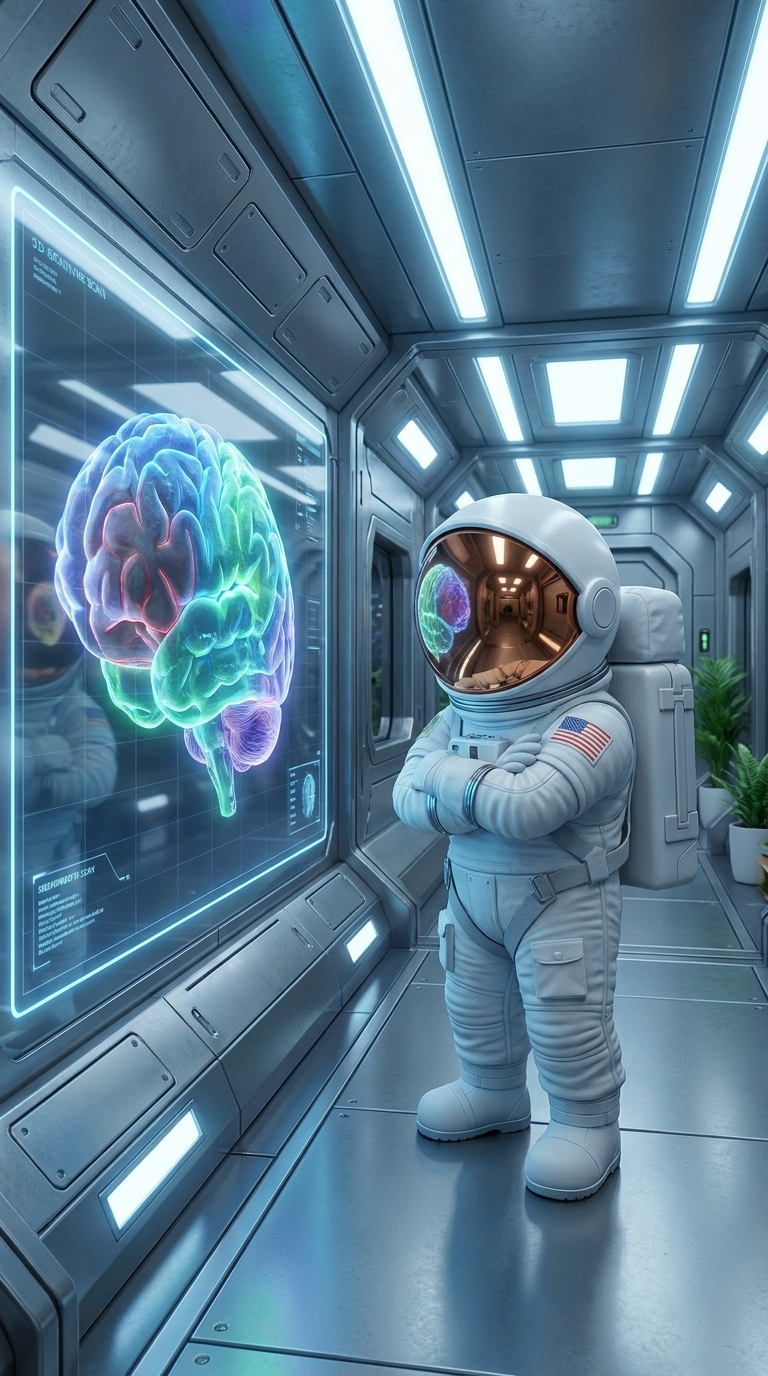
DeltaFosB: the molecular switch
Eric Nestler, a neuroscientist at the Icahn School of Medicine at Mount Sinai, has spent years researching a transcription factor called DeltaFosB. It accumulates in the nucleus accumbens — the brain's primary reward hub — with repeated high-dopamine experiences, and it acts as a kind of molecular switch that progressively sensitises the brain to addiction-related cues.
DeltaFosB has been found in elevated concentrations in the brains of people addicted to every substance that's been studied. It's also elevated by compulsive sexual behaviour. The same molecular mechanism that underlies drug addiction underlies pornography addiction. Nestler's research suggests that DeltaFosB accumulates gradually over weeks and months of repeated use, and — critically — it has a half-life of weeks rather than hours. This is part of why cravings don't disappear the moment you stop. The molecular residue of the addiction takes time to clear, which is one of the reasons the early weeks of recovery are so neurologically turbulent.
Why triggers hit so hard, even after a long streak
One of the most disorienting things about pornography recovery is cue reactivity — the way that a specific time of day, a device, a type of stress, or even a particular room can trigger a wave of craving that feels almost physical. People months or years into recovery sometimes report being blindsided by an urge they thought was long gone.
This is associative learning, the same mechanism Pavlov described in his dogs. The brain pairs environmental cues with the reward experience through repeated co-occurrence. After enough repetitions, the cue alone activates the craving circuitry, even in the absence of the reward. These associations don't erase when you stop — they fade gradually through a process called extinction, where the cue is repeatedly encountered without the reward. But they don't disappear on a timeline that feels fair. Some of them last for years.
The practical implication is that identifying your specific triggers and planning for them concretely — not just resolving to resist them — is one of the most important things you can do in recovery. The craving that hits at 11pm when you're alone with your phone isn't random. It's a trained response to a trained set of cues, and the only way to weaken it is repeated exposure to those cues without the behaviour following.
The brain can change back
The changes that pornography use produces are real and measurable. They're also reversible. Neuroplasticity — the brain's capacity to reorganise itself — works in both directions. Receptor density recovers. Prefrontal connectivity rebuilds. DeltaFosB clears. The timeline isn't short, and it isn't linear, but it's real.
The goal isn’t to white-knuckle through cravings on willpower alone — willpower is fighting with a compromised tool.
Understanding this shifts how you approach recovery. The goal isn't to white-knuckle through cravings on willpower alone — willpower is fighting with a compromised tool. The goal is to create the conditions under which the brain can do the biological repair work it's capable of doing: remove the overstimulation, replace it with natural reward inputs, give it time, and don't expect it to happen in two weeks.
That's the whole picture. Not a moral story. A mechanical one — with a real, evidence-based path back.